

Student and work visa bans imposed on some countries to prevent asylum claims
Government attempts to address increase in asylum claims by those enter legally with visas

The Home Office has announced it will cease issuing study visas to nationals of Afghanistan, Cameroon, Myanmar and Sudan and work visas for Afghans. The purpose is to prevent those entering on such visas from claiming asylum. The change will be introduced by new immigration rules on 5 March 2026 and comes into force on 26 March 2026.
Last year saw the second highest ever number of asylum claims made in the UK: 100,625. According to the immigration statistics released last week, the percentage of claims made by people holding a visa – for example as a visitor, student or worker – was 39%. That is almost as many as enter by small boat. Unlike small boats arrivals, the granting of visas is something the government can directly control.

If we look at how those figures have changed over time, the proportionate increase in asylum claims made by visa holders since Brexit is particularly striking. See the stacked data chart below.
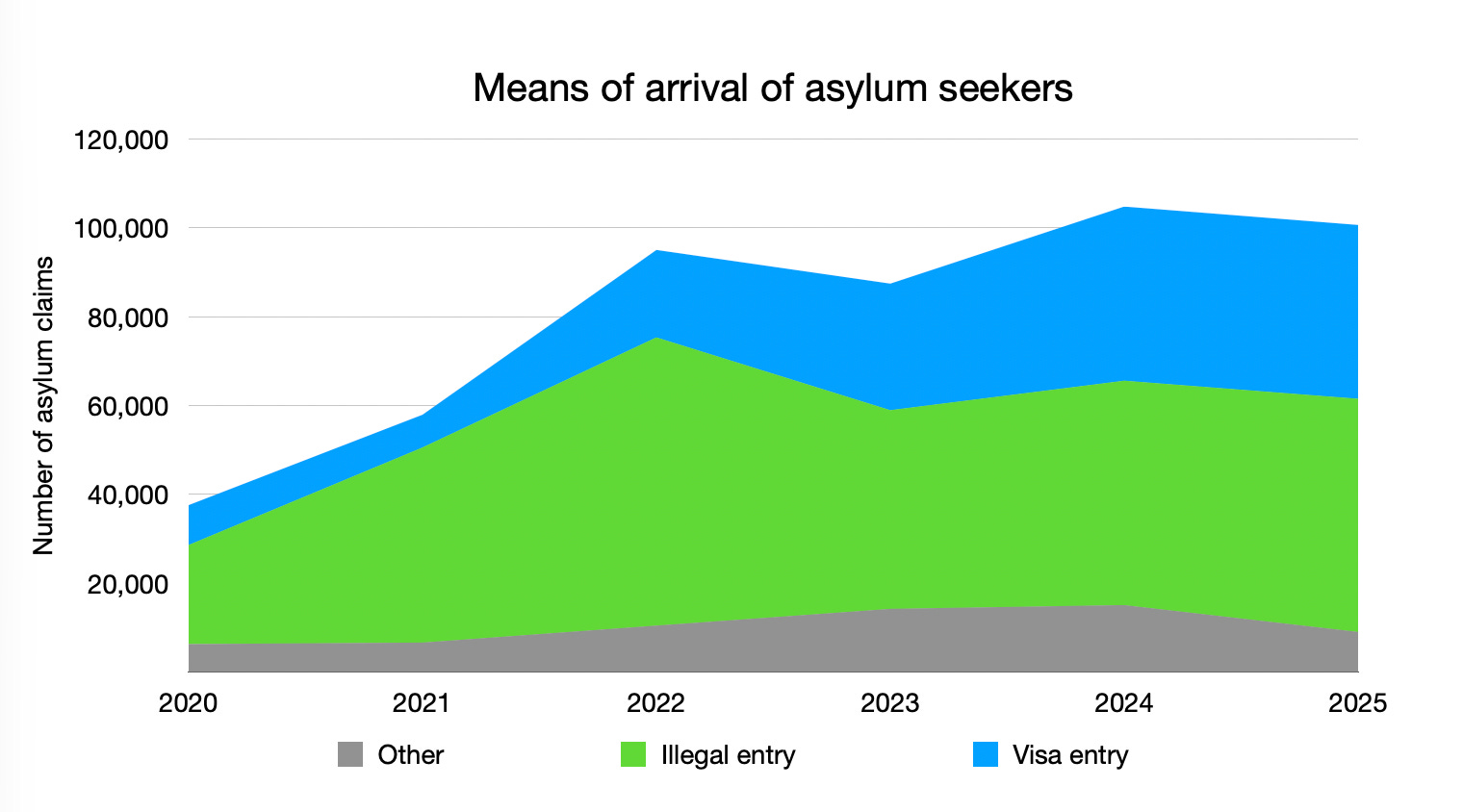
Of those who held a visa, 35% (13,557) held a work visa, 32% (12,578) held a study visa, 19% (7,521) held a visitor visa and 14% held other forms of leave. If the Home Office can substantially reduce the number of asylum claims made by visa holders, this will bring the number of asylum claims down potentially quite considerably.
However, the countries and visa types targeted by the Home Office in this change do not seem to align closely with asylum claims actually being made. The announcement carefully does not actually state how many asylum claims were actually made by the targeted visa holders of the targeted nationalities.
The Home Office does now publish statistics on the means of arrival of asylum seekers but as far as I can see does not fully break this down by nationality. In 2025 there were a total of 910 asylum claims made by Afghans with visas and 596 claims by Sudanese nationals with visas (chart Asy_01d in the asylum summary tables). It is not clear what type of visas they held and there are no figures I can see for the number of asylum claims made by nationals of Cameroon or Myanmar with visas.
95% of Afghan students are said to have claimed asylum, and the separate entry clearance statistics state that a total of 227 Afghan student visas were issued and 154 Afghan work visas, for example. The number of student visas for the other affected countries were Sudan: 243; Cameroon: 538; Myanmar: 2,084.
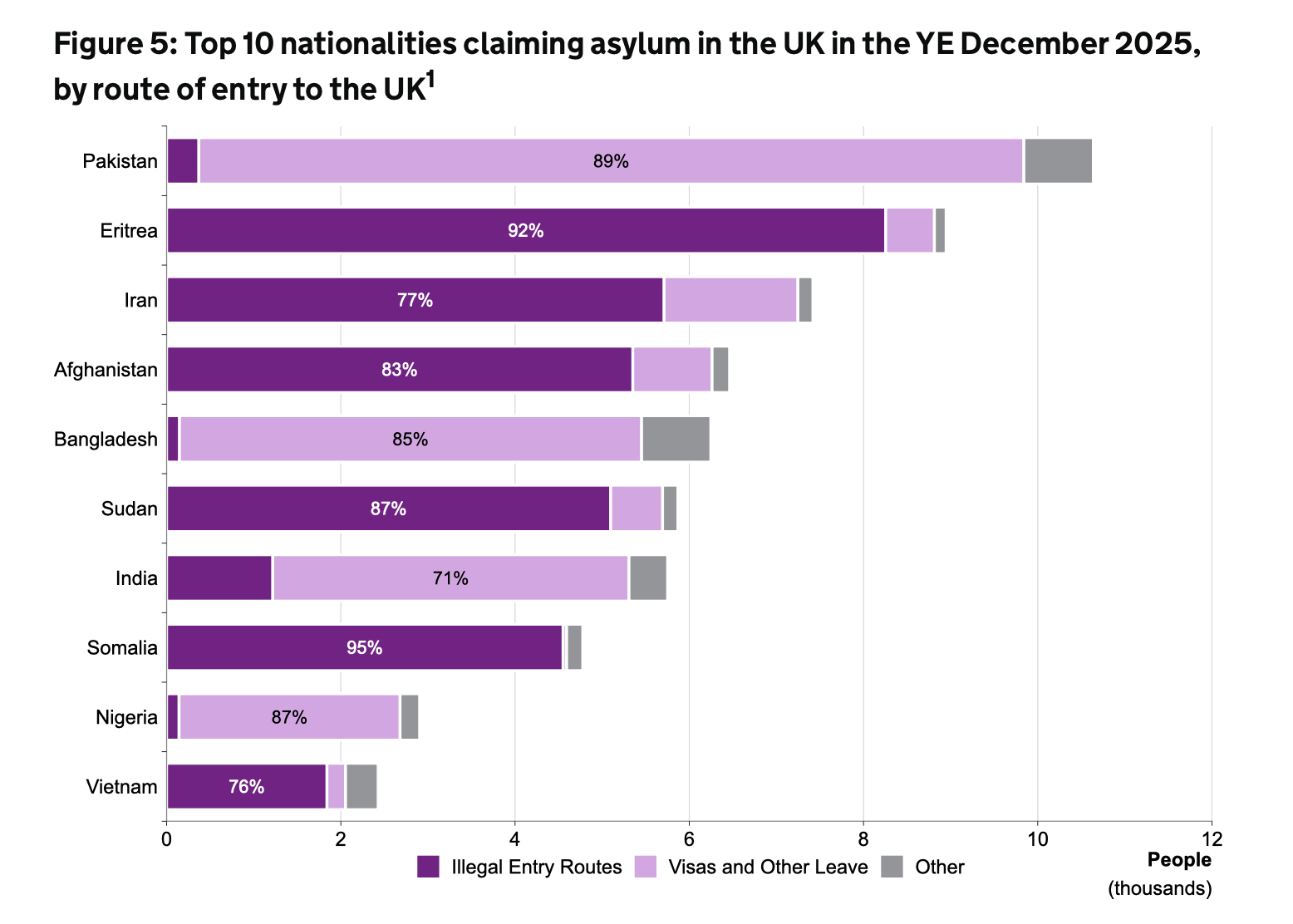
The increase in asylum claims by visa holders is largely a result of changes to the immigration system made since Brexit. EU citizens do not generally claim asylum. Some other nationalities do. The chart below from the Home Office’s own analysis last week tells us the nationalities of many of the asylum claims made by visa holders in the last year: Pakistan, Bangladesh, India and Nigeria make up a sizeable proportion, and they are source countries for many of the workers and students who have been recruited to the UK since the shift away from EU nationals brought about by Brexit.
It is no surprise that the government is looking for ways to reduce asylum claims by visa holders. It is the first time a targeted visa ban like this has ever been used but it may not be the last.
This article was first published on Free Movement on 4 March 2026